Editing Room

The semester is over, June wrap-up duties in the department are done – time to get going on some projects that have spent the year waiting to go on the front burners.

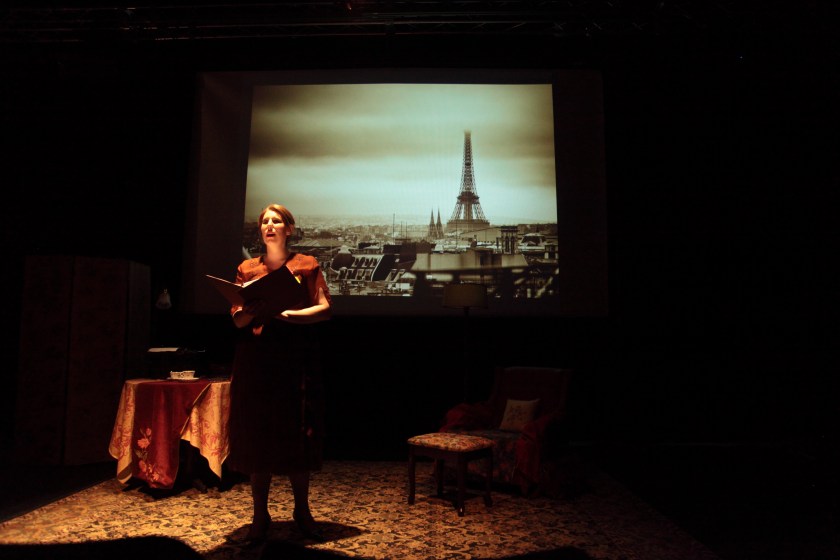
The big job I’ll be doing this coming year is a full revision of the chamber opera UNTIL THE WAR IS OVER, based on H.D.’s novel Bid Me to Live. The librettist, Jennifer Moxley, and I have had a few opportunities over the past 5 years to see/hear sections of the opera done in a bunch of settings (recording sessions, staged readings, semi-staged workshops), so that we now have a better sense of what works and what needs to go.

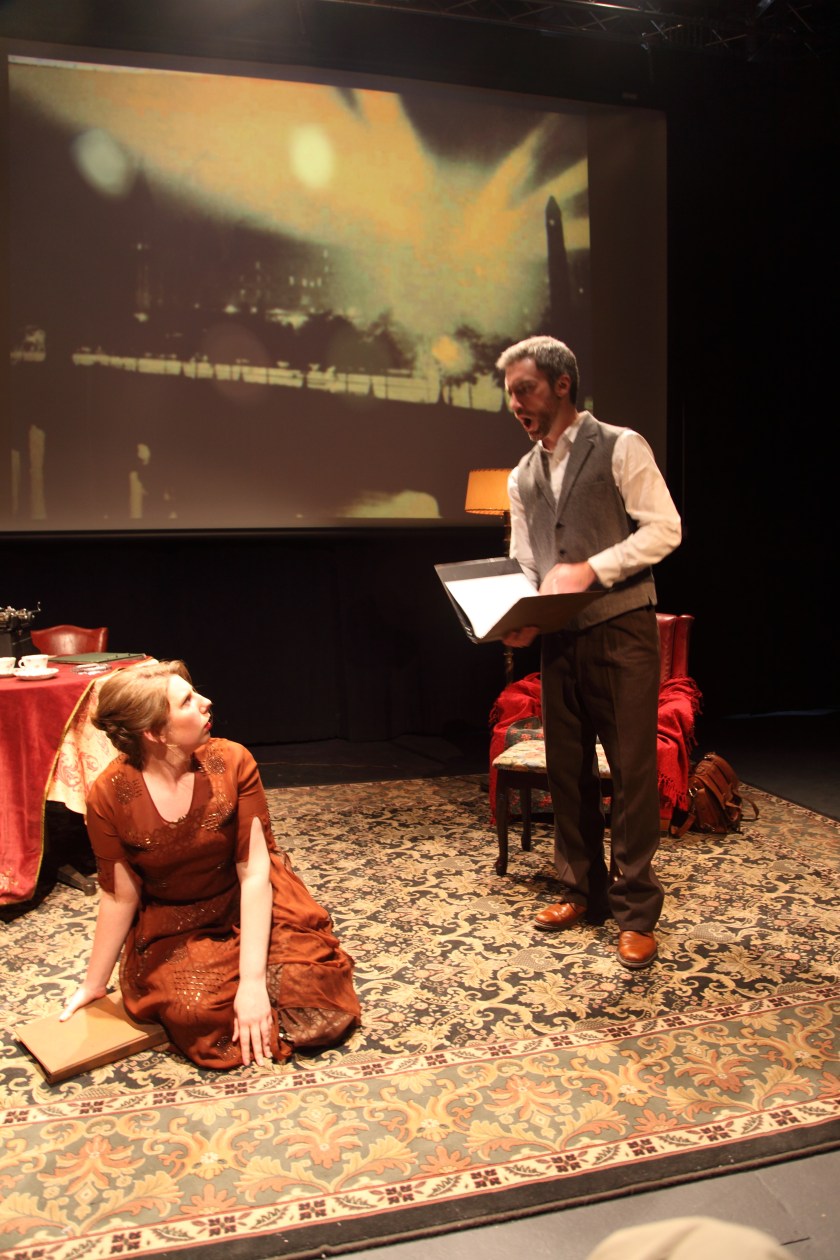
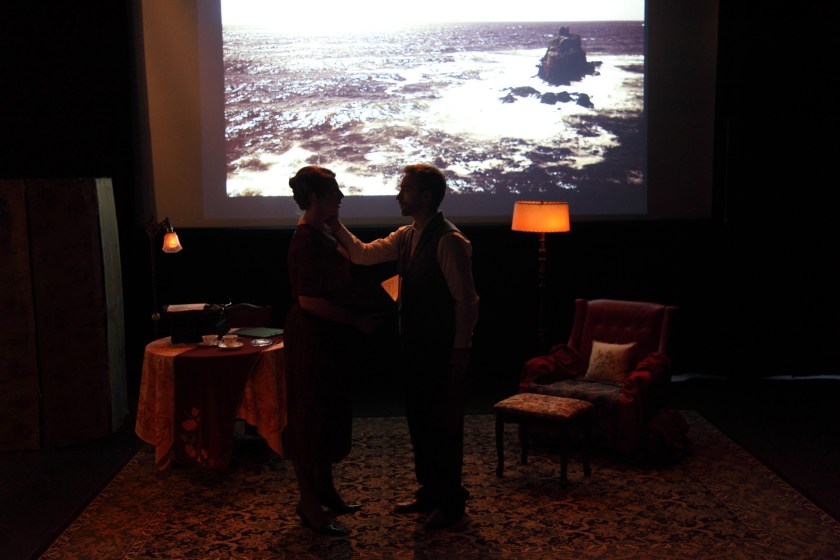
DSC_8307Lindsay Conrad and Isaac Bray in June 2019 workshop, Scene 2
When Jennifer and I returned from the John Duffy Institute for New Opera in 2017 we had it in mind to look at Scenes 1 and 4 in particular. Those scenes between H.D. and D.H. Lawrence came across not so much as conversations between characters, but as characters talking past each other. This is something that we originally thought of as a feature, not a bug, but we ultimately were missing out by not showing what drew those two writers together in the first place. Jennifer has worked on the dialogue so that the origins of their relationship can be heard underneath their arguments about poets and poetry, and now it’s time to sort through how this will work musically.

I’d also noticed that some of the instrumental textures needed to be cleared out so that the singers could have more direct support for their work onstage. The clip below shows the current form of an exchange between H.D. and her husband’s mistress –  a section that got streamlined during revisions last winter, which makes me optimistic about other revisions to come.


One of the mentors at the Duffy Institute warned us that making small changes throughout the piece would be complicated – pulling on a thread could wind up destroying the sweater. But I think the effort will be worth it; we just have to keep track of all the versions somehow in the process.


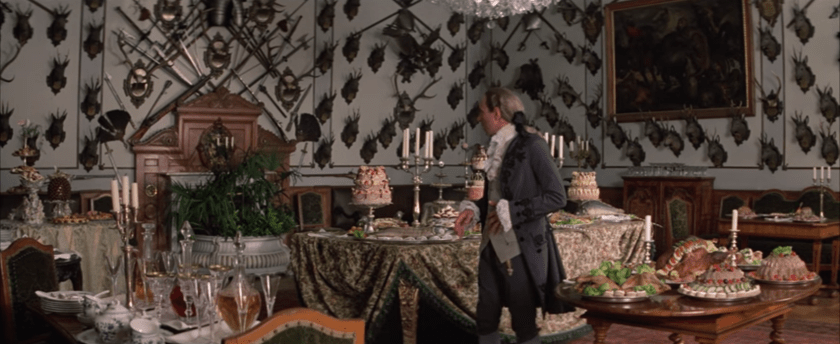
Revising the piece seems even more worth doing after I watched the “Director’s Cut” of Amadeus recently. This version is 3 hours long, 20 minutes longer than the theatrical release, and none of the additional 20 minutes helped the story. (It did make Salieri more evil, and so more one-sided. Mozart was simplified too, becoming even more of a brat than in the Best Picture version.) The added length here, which was actually the original cut, gets you more period costumes, longer descriptions of court maneuvering in Vienna, and apparently, something closer to the original play. The editing done back in 1984 for the theatrical release did away with the sometimes crude “explanations” behind each character’s actions. So the characters actually got more interesting to watch. You know, less is more.

(It’s harder to find the theatrical release now – the Director’s Cut is the one shown now at fundraisers and such.)

amadeus-deer(We know, Salieri likes sweets. We get it. But it’s pretty?)


All of this recent thinking about the editing work ahead has been colored by the death of my main teacher from graduate school, Peter Westergaard. Peter always put clarity first: in his composing, in his writing about music, in his opera libretti and translations. He thought that talking about musical style was a waste of time (not specific enough about how a piece works, basically not serious), even though from my perspective he had a strong individual style himself. The piece below from 2007 uses the imitative counterpoint and rolling triplet rhythms that I recognize from many of his works, which some might call part of his style. His take would be that those elements made his melodic and harmonic moves more transparent, easier to hear. Part of being a good composer, not a stylist. And a good editor.


Stonework

IMG_1778Summertime, when the living is at least partly composing..

When I told Davy I was working on a blog post about my newly finished piece, he said “You can call it ‘Rock Music,’ hehehe” (insert Elmer Fudd laugh here). Which I rejected as too on the nose.

It’s a piece for wind ensemble and video, written for the UMaine Symphonic Band upcoming season, and yes, it’s called Slate. And features lots of pictures of slate, movies of splitting slate, slate used for walls, roofs, etc. All kinds of slate (and shale, to be precise).

I realize that just using the word is borderline too trendy. There’s a new home décor store called Slate in Burlington, the town where we spend some summer composing time; there’s the established online magazine, a software program, a network for cryptocurrency, a roadbike model (with a “custom lefty fork”), and a MVMT-brand watch. A lot of people like this word, and the image/style it implies, and so do I.

We surrounded by the stuff here in the Vermont place, with walls and walkways that Dad built around the house all using slate, and the beach pretty much covered in skippable slate pieces that extend out under the lakeshore. When people have visited us in the past, some have actually suggested that I need to use the images around here in a piece, and this summer it finally happened.

I started with the idea of using the various definitions of the rock, and was going to incorporate the actual text in the piece, but eventually decided that would take away from the band’s performance. But the definitions certainly wound up organizing the piece into sections, so that showing slate “in use” were contrasted with slate in nature, or slate “up close.” The basic definition, noun only, usually lists the following elements:

________________________________________________

slate

slāt/

noun

a fine-grained gray, green, or bluish metamorphic rock easily split into smooth, flat pieces.

a flat piece of slate used as roofing material.

a flat piece of slate used for writing on, typically framed in wood, formerly used in schools.

a board showing the identifying details of a take of a motion picture, which is held in front of the camera at its beginning and end.

a small portable computer that accepts input directly onto its screen rather than via a keyboard or mouse; a tablet computer.

a bluish-gray color.

a list of candidates for election to a post or office, typically a group sharing a set of political views.

a range of something offered.

____________________________________________

Some definitions wound up being too specific for an impressionistic piece, so the election slate and the blackboard slate got eliminated pretty quickly. What wound up staying was relatively stately, and this will be especially so when it’s performed at the Collins Center this year in Orono. There will be a large screen above the band, so the slate pieces will be suspended above the players in slowly moving images, almost as a procession.

Obviously, it hasn’t been played yet – I’m working on the parts for the players now. But I made the director, Chris White, a demo of the piece using midi to replace the band (not ideal, true, but potentially helpful). Here’s the opening, using a mix of electronic and fake-wind ensemble sounds.

No splitting rocks in this section – that’s for when the lower brass take over. Hehehe.


The Summer of using other people’s stuff

I’ve been working on 3 composing/arranging projects since this May – all of them have some “outside” source material in their backgrounds, two of them very obviously, and one more covert. While using this kind of material isn’t so unusual for me, it’s not often that there’s a sequence of these kinds of pieces written back to back. Plus, the materials all had a kind of folk music flavor to them, so the summer work has taken on a different tone because of it.

The first piece will get its premiere performance in just a couple of weeks, as part of the Opera From Scratch festival in Halifax. Works for the festival had to have a Nova Scotian aspect, so I was researching various stories about the province before starting the piece. Eventually, I found (at UMaine of all places, in the Maine Folklife collection_) an interesting folk song that seemed promising. When checking with the festival administrators, it turned out that they themselves owned a copy of a set of folk-songs of Nova Scotia, with a version of the song in that antique volume. So, the song was officially Nova Scotian enough.


I had an idea that I could update the text so that the featured singer would be a more contemporary young woman, but keep some of the 6/8 meter of the original tune. After all was said and done, there were no complete versions of any one verse, either musically or lyrically, in the final product, but allusions to the original were everywhere. We’ll see how it turns out when the soprano has to negotiate both a piano accompaniment and some electronic background sounds in the actual performance.

Libretto: Charlotte is looking at herself in a mirror, wearing a better-than-average prom dress and primping. There’s a fancy scarf draped over the mirror, for use later.
The opening of the work is addressed to the audience. At different times in the piece, she sings the original folk song as a contrast with her own modern-day situation. Lighting may be used to define these sections of the work as being in a different environment from the opening section.
Coquettishly: Look at my dress, isn’t it great? Meant for the spring. Got it on sale.. ..You can’t wear this kind of thing.. Very refined, very lightweight. I can’t help it if it suits me! Dad hasn’t seen it. Or Mom. Have to wear sandals, Mustn’t wear boots, Should be fine with the right transportation. New Year’s party! Charles drives us down, All fifteen miles. Maybe in a limo!

The next piece is something that I will perform myself a few times next year – a new work for clarinet, vocoder and prerecorded sound. I was fooling around with a favorite tune by Gabriel Kahane, from one of the songs on The Ambassador:

The tune also has a folk-song quality in some sections, so the tune itself isn’t wildly different in tone from the Young Charlotte melody, though it is less regular in its phrasing.  Eventually, I just asked for permission to use the melody, and the composer wrote back to give that permission, saying that he is a “big believer in intertextuality.”

Now I have one full stanza of the tune in the new piece, with other contrasting material around it. Note – I also used a sample of a new grill-cleaning robot:

I had seen a commercial for this thing on TV while watching the news in June, and when I expressed some amazement at the gadget, Davy murmured “I already ordered one.”

So, there’s a variety of source material for this piece, all told – I suppose not all of it is folk-like.

The last part of the summer, before capitulating to school preparation, I devoted to arranging sections of Borodin’s Polovetsian Dances for clarinetist Jonathan Aubrey and his partner in the Aubarra Duo, Michael Rex Bacarra. I’d put off completing the arrangements from earlier in the year because of the sight in the original score of all the cascading arpeggios and scales in the dances, even in the slower section. (The fact that the slower section is actually called “The girls’ lively dance” speaks to this, even though the same tune is used as a ballad in “Stranger in Paradise” in Kismet. The same tune gets used as a march in the finale of Borodin’s orchestral piece, which makes its still livelier there..)

But now that the arrangement is done, I think seeing/hearing the clarinetists play all these fun and fancy figures will be really entertaining, and I look forward to having Jonathan and Michael play it. And of course, this source material had its own folk music sources in its melodies, part of the backbone of the original Borodin ballet.

With the school year almost here, I’ll go back to revising the chamber opera Until the War is Over, as both the librettist and I have ideas for strengthening the show. That will be the big project for the year, but it was good to have these past couple of months on small projects. With the humidity on the rise, it’s nice to have these efforts complete.


Being part of the group

250px-mary_tyler_moore_show_title_card

It’s a snow day, so I’m at home, not dealing with the snow yet but instead dealing with a non-draining washing machine. This seems like a very sit-com predicament, something that you would certainly see on The Mary Tyler Moore show, but with better lighting. The fact that I had to use my French Press coffee carafe to empty out the machine made it comic enough to make it into that TV genre, anyway, except for the 1970’s part.

The MTM connection of course springs to mind because of all of the tributes written after the actress’s recent passing – lots of clips in the feed about the theme song (not my personal favorite – my personal preference was for the theme from the other sit-com our family watched right after MTM, the B0b Newhart Show), her wardrobe, her physical comedy skills, etc. But many of the tributes aimed more at the assemblage of people thrown together in the MTM show – in what we now think of as a workplace comedy, where the workplace is essentially home.

My workplace community, like those of many musicians, expands and contracts depending on the immediate performance or teaching situation. A festival in a remote town? A clinic at a regional venue? An artists’ colony of individuals doing their individual things in individual studios? My regular office for the fall and spring semesters, and everyone who shows up there?

Some people within the community change their roles – performers you meet in one place pop up again somewhere else, colleagues take on different specialties, students eventually become teachers themselves, etc. The “workplace” can seem pretty large when these changes expand your own community contacts. But, in comparison with lots of other fields, the workplace of classically-trained musicians is small.

The world of contemporary music in particular is really small, and very divided by the interests (or aesthetics, if you want to be fancy) of those in that world. Just this week I was reminded of this after speaking with two Maine musicians from different subcultures within classical music, musicians who work within an hour of each other. Neither musician knew much about the other’s circle of  colleagues, in spite of having some musical friends in common (Maine being kind of a small community itself, that’s not so unusual).

But some people manage to maintain connections across wide swaths of the new music community – one group like this is Transient Canvas.  I’ve been involved with this duo in various ways – as a festival host, as a fellow performer, and as a composer. They have made a point of being open to all kinds of composers and their different styles, even while they maintain a unique duo (bass clarinet and marimba) without a past repertoire to draw on. They recently finished documenting a January concert where they premiered a piece of mine, and the video came out really well:


What you don’t see is the fact that people braved a REALLY cold night in Somerville to come see them play, and that the people at the show were not from any one single slice of the Boston new music crowd.

They’ll be coming to Lewiston in May to play the same piece, but they have a very full schedule all around the place, so check out their website to see where you can hear them live. Don’t miss your chance to see some of the linchpins in our small-but-also-large community.


Post-sad.

img_1297

As many people have noted, over the past week in particular, it’s been a complicated and stressful autumn. The number of things to be sad about and/or scared off is pretty high.

After a certain point, thankfully, mourning and dismay lose their sharp edges. Not everyone may be in this position yet after recent events, or even want to be. But I encourage everyone to just keep taking one step at a time.

Just last week, Chris Oldfather played a piece of mine that was written in memory of a good friend (and composer), Lee Hyla. Chris asked me about the mood of the piece – how tragic was it supposed to be, how mournful? We both came to the conclusion that this piece has a more “after-the-worst-times”  feeling. So, it seems appropriate to post the opening of that piece here.


New page on site – June workshop stuff


UntilTheWarIsOver76

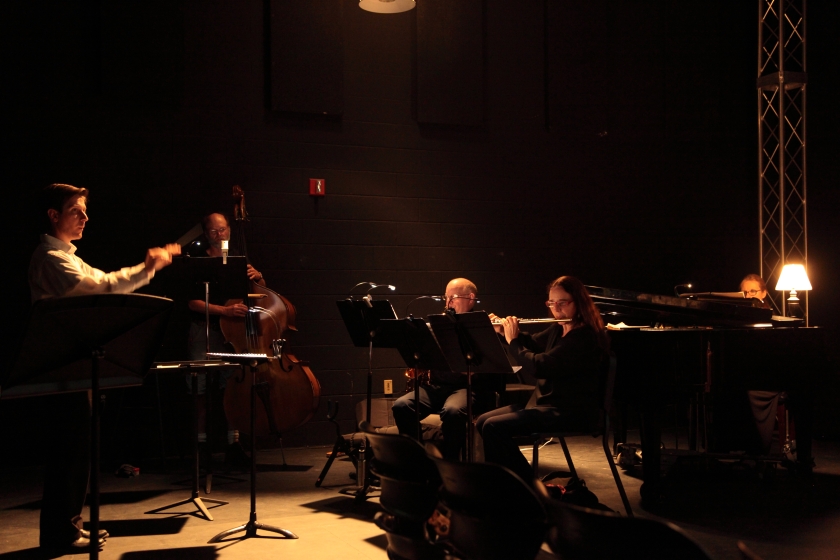
The band in the June 23, 2016 workshop performance, conducted by Patrick Valentino.

For those of you looking for the complete program from the June workshop performance of UNTIL THE WAR IS OVER, plus videos from the same production, just look at the link to the opera at the top of this site.

UntilTheWarIsOver16

Thanks to everyone involved in the show at UMaine!

Images from the summer so far..

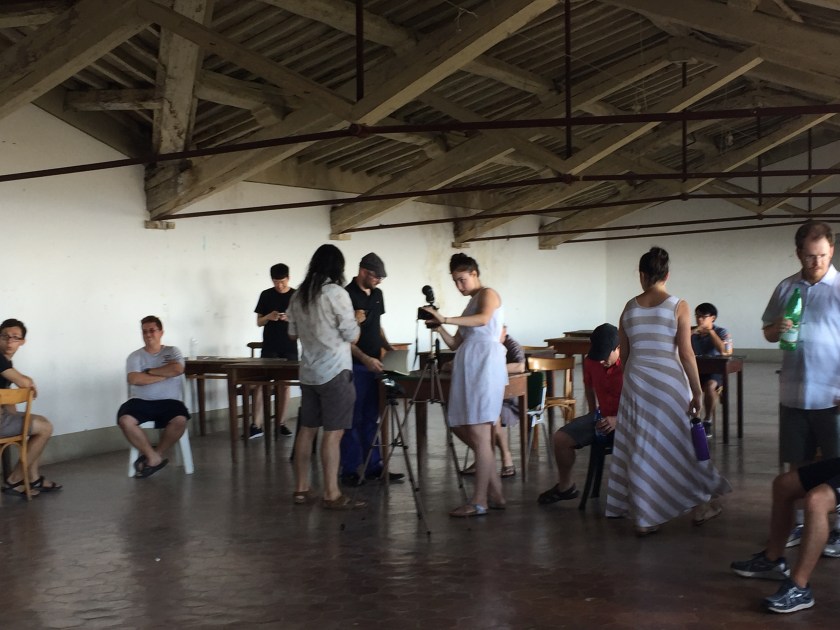
Back to back events in June – the workshop of scenes from the Moxley/Wiemann opera UNTIL THE WAR IS OVER, and traveling to teach at the Cortona Sessions for New Music in Cortona, Italy. More of both of those later, but for now, some pictures (thanks to Tom Mikotowicz for the workshop photography):

IMG_1240
Preparing for the IronComposer Competition in Cortona
IMG_1262
Our office for composition lessons in Cortona
UntilTheWarIsOver22
Jennifer Moxley introduces the workshop performance, June 23rd
UntilTheWarIsOver38
Lindsay Conrad and Stefan Barner in Scene 1, as Hilda Doolittle and D.H. Lawrence
UntilTheWarIsOver66
After the Air Raid in Scene 1
UntilTheWarIsOver80
Hilda’s nostalgic aria from Scene 3
UntilTheWarIsOver117
The last image in the workshop, Hilda and Lawrence

Easing into summer..

https://www.youtube.com/watch?v=HMaovX36OGM&feature=youtu.be

So, starting to work on a new version of the Jet-Pack piece for soloist (me) and electronics, which I’ll be playing at a few venues next season. Which means I have to drag some equipment around to various places this summer to try out the logistics, but it’s still a fun piece to work on. The trick will be to get the tech down to a manageable, and portable, situation. I may need a longer mic attachment.

In between work sessions on this new setting of Miriam Gamble’s poem, I’ll also be involved in the workshop of some scenes from UNTIL THE WAR IS OVER (a joint project with poet Jennifer Moxley) at UMaine next month. The public performance will feature musicians from Boston and Bangor in our very intimate Black Box space in the School of Performing Arts.until the war small workshop save date


The very next day, Davy and I are off to Italy to teach at the Cortona New Music Session. We’re looking forward, as we’ve heard good things from previous sessions, and we have many friends among the performers and fellows at the festival. We hope that the cats will not punish us too much for leaving them for a while.

Out and about in the snow, at least sometimes

With the big up and down’s in temperature over the past few weeks, it’s been hard to know what to expect for my regular commute. But, as things have turned out, my regular commute isn’t happening much this month, due to gigs in Maine and “away.” So the difficult driving job is more Davy’s concern this month – he’ll be coming up to Bangor tomorrow after spending today clearing out the mostly unexpected snowfall of Feb. 5th. The snow is coming down quickly as I write this, even though here in Bangor we’re weren’t supposed to be in on the action for this storm.

12552557_10153763704668260_4920369024481961161_n    Davy will get here in time to hear the UMaine faculty concert where Phillip Silver and I will premiere a new work by Paul Schoenfield – the 2nd Sonatina for Klezmer Clarinet and Piano. The piece was commissioned by a group of clarinet players and their friends, a Clarinet Collective, a couple of years ago, and regional premieres began happening last fall from other Collective members. This February was the earliest I could schedule the Maine premiere for my contribution to the Collective, but I think the extra time with the piece will serve us well. For both of us playing, it’s a fun 10 minutes of music – lots of klezmer references with metrical games throughout.

Last weekend I also stayed in Maine, for the performance of “Astonishing,” the School of Performing Arts fundraiser this year, and for the UMaine Humanities Center’s Pecha Kucha event. Curated by Liam Riordan, and run by Bangor’s own Pecha Kucha obsessive Gibran Graham, a host of people showed up at CoeSpace downtown, and made the space feel like summer in spite of the spitting snow outside. Lots of people, pretty warm in the room:

12654690_1662842304003445_1378635346619292462_n

There were 8 of us presenting our 6 minute 40 second stories-with-slides: in my case, stories-with-slides-and-music. There were colleagues from UMaine as well as artists from the area that I hadn’t met before. Because of the relatively unfamiliar format for all of the speakers, we dress-rehearsed beforehand, which lead most of us to change our tactics a bit when it came to the public event – mainly a process of editing for impact, and editing for keeping up with the slides’ timing. I chose to speak about the ongoing project with Jennifer, our chamber opera UNTIL THE WAR IS OVER, and used the preparation for this event to get back into planning for the workshop of scenes 1 and 4 this June in Hauck Auditorium.

Next up – working on taxes with Davy (we did start, at least with the paper receipts – now we move to the online collection of stuff we’ve paid for this year) and then on to West Virginia to hear a performance of “The Only Color I have” at Marshall University. Will there be snow there, leftover from the January blizzard?

Also next up – getting some materials ready for the Back Cove Contemporary Music Festival’s concerts in honor of Elliott Schwartz, the long-time champion of new music in Maine and beyond – just a few of the events planned throughout the year for Elliott’s 80th birthday. More info to come on those April events, with the hope that by April the snow will have stopped for a while.


November – getting everything in before the snow comes…

By this time last year, we’d already had tree damage to the Bangor house due to record snow fall. So, I am thankful (on this day of Thanksgiving) that this year I was able to get where I needed to get to without having to shovel the car out first.

And I did have to get to a variety of places this month in addition to my regular commute. First, to Brooklyn, to hear Ensemble mise-en play my new piece for the first time. That the group has its own rehearsal and concert space in Bushwick is a real advantage for these players, all very busy freelance performers and specialists in contemporary music. And fittingly for the neighborhood, there’s gourmet grilled cheese nearby.

IMG_1049

The Brooklyn concert featured some pretty intense music from a bunch of New England composers, although my own contribution aimed at comedy more than anything else: the piece is based on Miriam Gamble’s poem “Introducing the Nissan Jet-pack,” and uses various kinds of machine sounds both from the live performers and from accompanying electronic sounds.

Jet Pack demo

Some of the comedy didn’t quite play – I will need to do some editing on the piece to get the proportions correct, and to get more info to the players on the overall mood. By the time the piece was done again in Maine, I think the feel was better, and the larger space made the sound mix a little cleaner. Recording the work is also tricky, given the various sound sources and the use of some spoken text. This recording, from the dress rehearsal, is the best take I have for the vocoder sounds in the ending:

Jet Pack – ending

The trip in between these performances took place in Hartford, with the Hartford Opera Theater‘s New in November event. Six scenes selected from 6 different operas were put together in a couple of weeks, with some basic staging and piano accompaniment. Each scene had its own team of performers, stage director, conductor and pianist, all of whom had to work at maximum efficiency to get the scene on stage.

Contrast the figuring-out-what’s-happening next photo from the dress rehearsal..

IMG_1041

with the look of the scene excerpted from “Until the War is Over”(libretto by Jennifer Moxley) ..

IMG_1047

and you get a sense of what needed to happen in just one afternoon. The whole company was a pleasure to work with, and I hope to have video of the scene soon to share.

While the whole extended trip was memorable and eventful, I am also glad that it all got done before the season changed and the push to the end of the semester started. Also glad that the slow leak in my front tires didn’t prevent me from doing the extra driving, and that Subaru found and fixed the problem without fuss.

And now, this week in Bangor weather:

IMG_0286